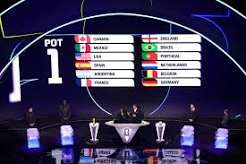
Are There Real “Groups Of Death” At World Cup 2026?
With 48 teams split into 12 groups of four and 32 places in the knockouts, World Cup 2026 looks, on paper, less brutal than past editions where only two of four progressed. Yet the phrase “group of death” has not disappeared; instead, it has shifted from an objective death sentence to a label for whichever groups cram the most quality, uncertainty and tactical variety into three matchdays. For anyone who likes to follow full matches and performance patterns, those groups are still the best early window into how elite sides cope under pressure.
How The 48-Team Format Has “Killed” The Classic Group Of Death
Analysts who have run historical comparisons using Elo ratings and qualification paths argue that 2026 has effectively “killed” the traditional meaning of a group of death. In older 32‑team tournaments, groups such as 2014’s Spain–Netherlands–Chile–Australia or 2002’s Argentina–England–Nigeria–Sweden combined a high average rating with the knowledge that one superpower was almost certain to go home early.
In 2026, the top two in each group still go through, but they are joined by eight of the 12 best third‑placed teams to make a round of 32, raising the progression rate from 50% to about 66.6%. That safety net makes it much harder to create a “true” group of death where three heavyweights enter and one is guaranteed to fall; a strong side can rescue its campaign with a third‑place finish and still find a viable knockout path. From a viewing perspective, that doesn’t remove jeopardy—it just pushes it into more subtle scenarios involving tiebreakers and cross‑group third‑place races.
Which Groups 2026 Experts Actually Call “Groups Of Death”?
Because of that safety net, most writers now use “group of death” as shorthand for “the toughest, most balanced group” rather than a mathematically lethal one. An ESPN piece on the draw noted that some of the supposedly scary groups don’t qualify by old standards, because the gap between favourites and outsiders remains clear. Even The Athletic’s group‑strength analysis concludes that while some groups are stacked, none quite match the peak difficulty of historical monsters once you factor in the third‑place escape route.
Where there is more agreement is around relative difficulty. Several outlets and broadcasters point to two groups in particular—often labelled I and L—as this tournament’s best candidates, mixing elite European or South American seeds with strong second seeds and dangerous third teams. The common pattern is not three superpowers but a cluster where Elo or FIFA rankings for all four teams sit above a certain threshold, making every match tactically meaningful. As a viewer, that’s what you should look for: groups where you genuinely can’t write off any fixture as a dead rubber.
What To Look For When You ดูบอลสด A “Group Of Death”
When you ดูบอลวันนี้ goaldaddy. one of these high‑end groups, the key is to treat every match as a mini knockout tie rather than just another group game. Because third place can still qualify, teams have a wider range of risk‑reward options in how they set up: a side might accept deeper blocks and lower pressing to avoid heavy defeats that could damage tiebreakers, or push high early in the group knowing they have a third‑place safety net later. Watching full games lets you read these choices in real time: line height, how aggressively full‑backs join attacks, whether a team settles at 1–0 or continues to chase xG.
Another change is that goal difference and goals scored remain vital, especially for ranking third‑placed teams. In a strong group, you’ll often see the favourite go after an extra goal late even when the points are effectively secured, precisely because they know +2 instead of +1 could decide seeding or a third‑place race. When you see a side keep their press on at 3–1 or make attacking substitutions rather than shutting the game down, it’s not just “entertainment”—it’s tournament math showing up on the pitch.
How Analysts Measure Group Difficulty In 2026
To move beyond vibes, several outlets have used quantitative metrics to rank 2026 groups. One common approach is to calculate average and summed Elo or SPI ratings across each group, then adjust for spread: tight clusters are considered more dangerous because there are fewer “easy” points. When researchers did this across all 128 historical World Cup groups, they found that 2026’s toughest trios—if you take the top three teams in each group—still rank high but not at the absolute top of all time, mainly because expansion has added more lower‑ranked teams overall.
Qualitative rankings, like Al Jazeera’s pre‑tournament group list, line up reasonably well with those numbers; their “strongest” groups tend to be the ones with multiple continental champions or recent deep‑run sides, while their weakest feature a single strong seed plus two or three relative minnows. For viewers, the precise order matters less than the principle: when you see a group where every team has recently gone far in continental tournaments or has a top‑30 Elo, you can expect matches that look and feel like early knockout ties even in round one.
H3: Why The Old “Group Of Death” Concept Feels Different In 2026
| Factor | 32-team era (1998–2018) | 48-team 2026 format |
| Groups | 8 groups of 4 | 12 groups of 4 |
| Teams progressing per group | Top 2 only (50% overall) | Top 2 plus 8 best thirds (≈66.6% overall) |
| Classic “group of death” | 3 heavyweights, 1 likely victim | 2–3 strong sides, but third can still escape |
| Main jeopardy | Big team finishing 3rd and going out | Seeding, knockout path, third‑place ranking |
This shift is why some writers say the term is “dead” in its original sense but still useful as a shorthand for “most stacked group.”
How To Watch These Groups Without Overreacting
One trap in 2026 is to over‑interpret a single result from a tough group as definitive proof of a team’s level. Draws between elite sides or narrow wins against well‑organised opponents may look underwhelming compared with what models predicted, but the format’s safety net allows teams to build into tournaments more than before. From a tactical viewing perspective, it is smarter to track how structures look across all three group matches—pressing cohesion, rest‑defence, chance creation—than to treat one shaky performance as a fatal flaw.
At the same time, strong groups are where you can spot future deep‑run teams early. A side that handles varied tests—different pressing schemes, blocks, individual stars—across three tough fixtures is showing robustness that will matter in a round of 32 and beyond. If you see a team consistently control central areas, adapt in‑game and maintain xG superiority even when results are mixed, they’re likely better equipped for the chaos of the expanded knockouts than one who cruised through a soft group.
Summary
In a 48‑team World Cup where 32 nations reach the knockouts, the classic “group of death” has lost its old, ruthless meaning, but a couple of 2026 groups still stand out as unusually stacked when you look at ratings, recent form and balance. For fans who focus on live match understanding, those groups are the best early laboratory: by watching how top teams manage risk, chase goal difference and adapt tactically across three demanding fixtures, you get a clearer sense of who is truly equipped to navigate the long, expanded path from a tough group into the deeper rounds.